Can Beginners Lift Heavy Weights? (Facts Explained)
Discover if beginners can lift heavy weights safely and effectively. Learn about benefits, risks, proper form, and routine structuring for rapid strength gains.
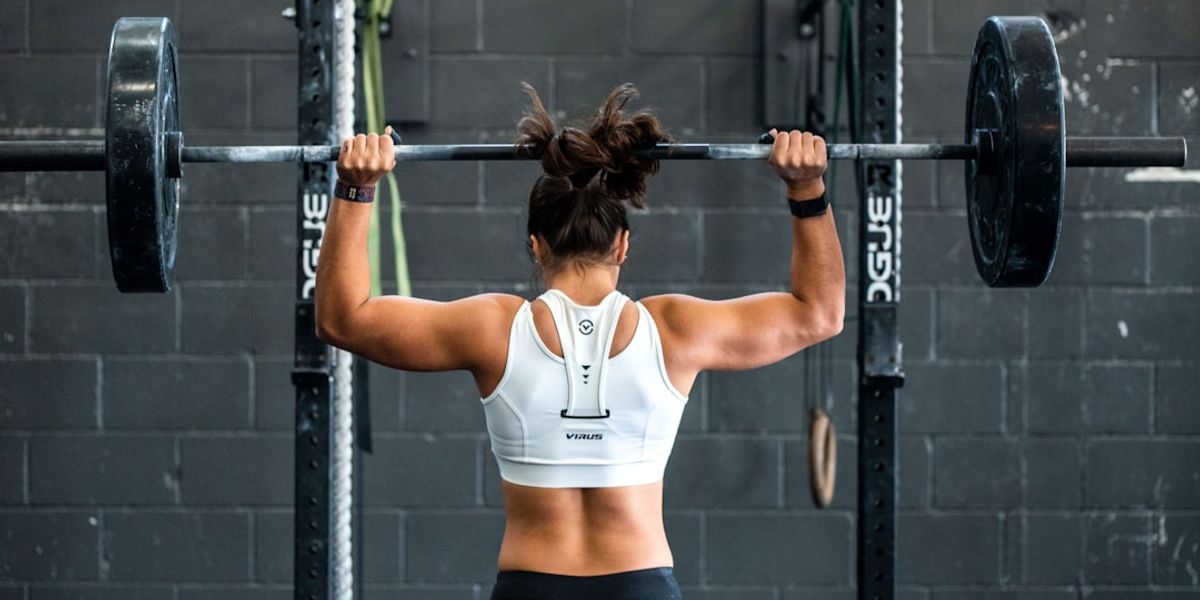
Are you new to the gym and wondering if you can, or even should, be lifting heavy weights? It's a common question, often fueled by images of seasoned lifters pushing impressive loads. The idea of "heavy" is subjective, but the underlying concern is valid: how do you build strength safely and effectively when you're just starting out?
This post will demystify the concept of lifting heavy for beginners. We'll explore the benefits, the risks, and most importantly, the strategies to incorporate heavier lifting into your routine safely. Forget the notion that you must spend months on light weights; with the right approach, beginners can absolutely engage with challenging loads to foster rapid progress.
The Myth of the Light-Weight Start
For years, a common piece of advice for beginners was to "start light and focus on form." While good form is non-negotiable, the emphasis on exclusively light weights can be a disservice. The human body is remarkably adaptable. When presented with a stimulus that challenges it – in this case, a weight that requires significant effort to move – it responds by getting stronger and building muscle. Staying with weights that feel too easy for too long can lead to stagnation and a slower path to achieving your strength goals.
Understanding "Heavy" for You
"Heavy" isn't a universal number. It's relative to your current strength level. For a beginner, a weight that allows you to complete 5-8 repetitions with good form, where the last one or two reps are very challenging but still technically sound, could be considered heavy. It's not about ego lifting or attempting weights you can barely budge. It's about finding a load that pushes your current capabilities within a safe rep range.
Benefits of Lifting Heavier (Safely) as a Beginner
Incorporating heavier lifting into your early training can yield significant advantages:
1. Accelerated Strength Gains
When you lift weights that challenge you, your neuromuscular system becomes more efficient at recruiting muscle fibers. This leads to quicker improvements in strength compared to consistently using lighter weights for higher repetitions. This rapid progress can be incredibly motivating for beginners.
2. Enhanced Muscle Hypertrophy
While moderate rep ranges (8-12) are often cited as the "sweet spot" for muscle growth, heavier lifting (lower rep ranges, 4-6) also effectively stimulates hypertrophy. The key is progressive overload – gradually increasing the demand on your muscles over time. Lifting heavier is a direct way to implement this principle.
3. Improved Bone Density
Strength training, especially with challenging loads, is crucial for building and maintaining bone density. The mechanical stress placed on bones during heavy lifts signals the body to strengthen them, which is vital for long-term health and injury prevention.
4. Increased Confidence and Motivation
Successfully lifting a weight that once seemed impossible is a powerful confidence booster. Seeing tangible progress in your strength can dramatically increase your motivation to stick with your training program and push further.
The Crucial Role of Proper Form
This cannot be stressed enough: lifting heavy weights is only safe and effective if your form is impeccable. Poor form is the fastest route to injury and will ultimately hinder your progress. Before you even consider increasing the weight, ensure you have mastered the movement patterns with lighter loads.
Mastering Compound Movements
Compound exercises, which involve multiple joints and muscle groups, are the foundation of any effective strength training program. These include squats, deadlifts, bench presses, overhead presses, and rows. Focusing on mastering the form for these lifts with a manageable weight is paramount.
Progressive Overload: The Engine of Progress
Progressive overload is the principle of continually increasing the demands placed on your musculoskeletal system over time. For beginners, this can be achieved in several ways:
- Increasing Weight: This is the most direct way to lift heavier. Once you can comfortably complete your target rep range with good form, increase the weight slightly for the next session.
- Increasing Repetitions: If you're not ready to increase weight, try to perform one or two more repetitions with the same weight.
- Increasing Sets: Adding an extra set to your exercise can increase the total volume and challenge.
- Decreasing Rest Time: Shorter rest periods between sets can increase metabolic stress and muscular endurance.
- Improving Form/Tempo: Performing the lift with better control or a slower eccentric (lowering) phase can make it more challenging.
For beginners, tracking these increases is essential. A good strength tracker can help you monitor your progress, ensuring you're consistently applying progressive overload. This is where tools like a strength tracker become invaluable, helping you log your lifts and see how far you've come.
Structuring Your Beginner Routine for Strength
When designing a workout plan, beginners often benefit from full-body routines or a simple split. The goal is to hit major muscle groups multiple times per week to maximize the learning and adaptation phases.
Full Body vs. Split Routines
- Full Body Workouts: These involve training most major muscle groups in each session. They are excellent for beginners as they allow for frequent practice of fundamental movements and promote systemic adaptation. You might perform squats, bench press, rows, and overhead press in one session, resting a day in between.
- Split Routines: These divide the body into different muscle groups or movement patterns to be trained on separate days. For a beginner, a simple upper/lower split or a push/pull/legs split can be effective. For instance, you might dedicate one day to lower body and core, and another to upper body. If you're looking for a structured approach, exploring how to create a gym routine for beginners can provide excellent starting points.
Sample Beginner Strength Focus Routine (3 Days/Week)
This is a sample and should be adjusted based on individual recovery and progress. Focus on mastering the form before increasing weight.
Day 1: Full Body
- Barbell Squats: 3 sets of 5-8 reps
- Barbell Bench Press: 3 sets of 5-8 reps
- Barbell Rows: 3 sets of 5-8 reps
- Overhead Press: 3 sets of 5-8 reps
- Plank: 3 sets, hold for 30-60 seconds
Day 2: Rest
Day 3: Full Body
- Deadlifts: 1 set of 5 reps (focus intensely on form)
- Pull-ups (or assisted pull-ups/lat pulldowns): 3 sets of as many reps as possible (AMRAP) or 5-8 reps
- Dumbbell Lunges: 3 sets of 8-10 reps per leg
- Dumbbell Bench Press: 3 sets of 8-10 reps
- Face Pulls: 3 sets of 10-15 reps
Day 4: Rest
Day 5: Full Body
- Barbell Squats: 3 sets of 5-8 reps
- Barbell Overhead Press: 3 sets of 5-8 reps
- Barbell Rows: 3 sets of 5-8 reps
- Dips (or assisted dips/triceps pushdowns): 3 sets of AMRAP or 8-10 reps
- Leg Raises: 3 sets of 10-15 reps
Day 6 & 7: Rest
As you progress and adapt, you might transition to more specific training splits. For those aiming for significant muscle growth, understanding the best 4-day gym split for muscle growth can be a logical next step after building a solid foundation.
Potential Pitfalls and How to Avoid Them
While lifting heavy is beneficial, beginners must be aware of potential challenges:
1. Ego Lifting
This is perhaps the most common pitfall. Trying to lift more weight than you can handle with good form simply to impress others or yourself is dangerous. Always prioritize technique over the number on the bar. If your form breaks down, the weight is too heavy.
2. Insufficient Recovery
Heavy lifting places significant stress on your body. Adequate rest, sleep, and nutrition are crucial for muscle repair and growth. Overtraining without proper recovery can lead to fatigue, decreased performance, and increased injury risk. Listen to your body and don't be afraid to take extra rest days when needed.
3. Neglecting Warm-ups and Cool-downs
A proper warm-up prepares your muscles and nervous system for the demands of lifting. This typically includes light cardio and dynamic stretching. A cool-down with static stretching can aid in flexibility and recovery. Skipping these can increase your susceptibility to injury.
4. Ignoring Pain
There's a difference between muscle soreness (DOMS - Delayed Onset Muscle Soreness) and sharp, persistent pain. Muscle soreness is normal, especially when starting or increasing intensity. However, any sharp, joint, or persistent pain should not be ignored. It's a sign to stop, assess, and potentially seek professional advice.
5. Lack of Consistency
Even with the perfect routine, sporadic training won't yield optimal results. Consistency is key for progressive overload and building strength. This is where a reliable workout app for muscle gain can help keep you on track, providing structure and motivation.
Frequently Asked Questions
Can beginners lift heavy weights on day one?
While you can certainly lift weights that feel challenging on day one, it's crucial to prioritize learning proper form with lighter loads first. Focus on mastering the movement patterns before attempting maximal weights.
How do I know if a weight is too heavy?
A weight is too heavy if you cannot complete the target number of repetitions with good form. If your back rounds during a deadlift, your knees cave in during a squat, or you can't control the movement, the weight is too heavy.
What are the safest heavy lifts for beginners?
Compound movements like the goblet squat, Romanian deadlifts with dumbbells, bench press with dumbbells, and seated overhead press with dumbbells are often good starting points for learning to lift heavier with a focus on safety and control.
How often should beginners lift heavy?
For beginners following a full-body routine 3 times a week, incorporating heavy sets (e.g., 5-8 reps) for compound lifts in 1-2 sessions per week is generally appropriate, provided recovery is managed well.
Is it okay for beginners to experience muscle soreness after lifting heavy?
Yes, experiencing muscle soreness (DOMS) is normal, especially when you're new to training or increasing the intensity of your workouts. It typically subsides within a few days. However, sharp or persistent pain is not normal and should be addressed.
How long does it take for a beginner to see strength gains from lifting heavy?
Beginners often see noticeable strength gains within the first few weeks of consistent training, especially when incorporating progressive overload and challenging weights. This is due to rapid improvements in neuromuscular efficiency.
Conclusion
The question of whether beginners can lift heavy weights has a clear answer: yes, they can and often should, provided it's done intelligently. The key lies in prioritizing impeccable form, understanding what "heavy" means for your individual strength level, and implementing progressive overload systematically. By focusing on fundamental compound movements and listening to your body, you can safely and effectively build a strong foundation for years to come. Don't shy away from challenging yourself; just do it with knowledge and caution.
Our mission at Gymdo is to empower your fitness journey with intelligent guidance. We understand that training smarter is key to achieving your goals, which is why we've developed a science-backed gym workout tracker designed to simplify and personalize your fitness experience. Gymdo provides intelligent guidance tailored to your goals, helping you train smarter without the guesswork. Available for free on iOS, Gymdo combines data-driven insights with an intuitive experience to support users at every level of their fitness development, ensuring you always know your next best move.

Written by
M.P
M.P. is an editor at Gymdo, where he writes about strength training, workout programming, and building sustainable fitness habits.
More to read

How to Feel Confident in the Gym as a Beginner
Feeling confident in the gym as a beginner is achievable with preparation, smart strategies, and a positive mindset. Learn how to plan workouts, use machines, focus on form, and overcome anxiety.
The Best Weekly Gym Schedule for Beginners
Discover the best 3-day gym schedule for beginners, focusing on full-body workouts, proper form, and recovery for sustainable strength gains. Learn key principles and how to progress.

The Biggest Fitness Misconceptions Explained
Uncover the truth behind common fitness myths! Learn why women don't get bulky from lifting, spot reduction is impossible, and 'no pain, no gain' is a dangerous myth. Discover the facts about sweat, training volume, and post-workout nutrition.